You may know me as
Laundromat Girl

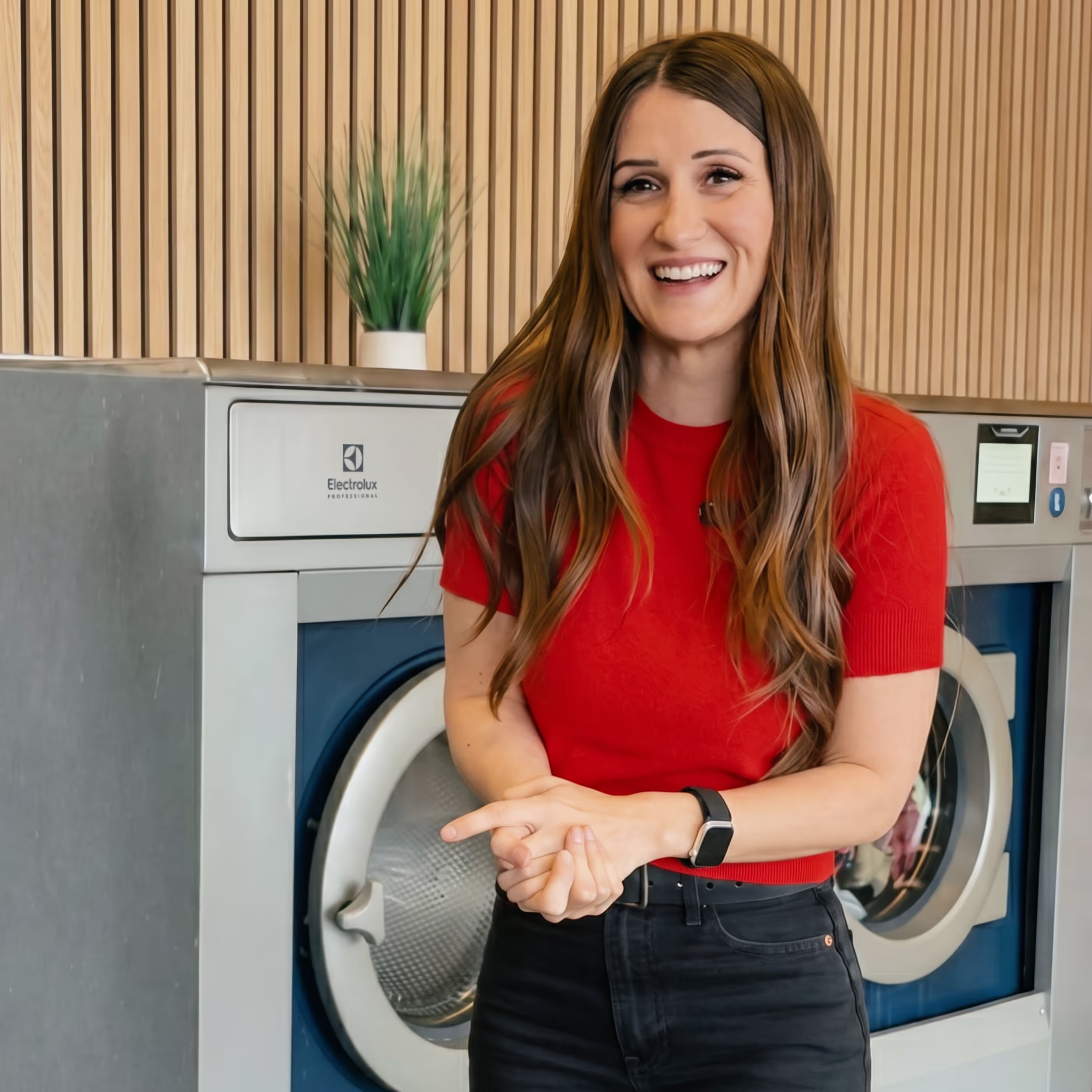
I'm here to help you launch and ramp your laundromat business.
Here are the big 4 topics you'll need to research and tackle.
Find The Right Location
There's more To Laundromat site selection than demographics and anchor tenants
Select The Right Equipment
The machines you choose affect utility costs, cycle times, and whether customers come back
Fund Your Project
Budget enough equity to launch your store, but don't try to fund everything yourself
Grow Your Business
Marketing and operations will determine how fast you ramp and how profitable you stay
Join The Laundromat Girl Academy







Weekly Live Q&A Calls
Monthly Expert Webinars
Deal Analysis Calculator
Budget Templates and P&L Tools
A Growing Community of 440+ Members
From Nurse to Laundromat Operator
Started nursing career
Worked as a bone marrow transplant nurse for 13 years. I loved helping patients, but the schedule was brutal—12-hour shifts, holidays away from family, and zero control over my time. I knew I couldn't do this until retirement.
2020
Made the leap
I sold my house for $310K, moved into a rental, and decided to bet on myself. I'd been researching businesses for a year—storage units, mobile home parks—but laundromats kept coming back to the top of my list.
2020
First laundromat
I bought a 20-year-old laundromat in Arizona for $300K. Put down $200K (from selling my house plus savings), seller-financed the rest at 6%. It was already cash-flowing, but I saw so much potential.
2020
The grind - 2.5 years
I ran the laundromat while still working full-time as a nurse. Some nights I'd finish a 12-hour hospital shift, then head to the laundromat to fold laundry until midnight. I added pickup and delivery service in 2021. That changed everything.
2023
Quit nursing for good
The laundromat was out-earning my hospital salary, and I finally had a team in place. I bought a new house and started documenting my journey on social media.
Systems-driven business
$475K in revenue. 6 full-time employees. I work about 5-6 hours a week on the laundromat now. For the first time in my adult life, I'm home for every holiday and I never have to ask permission to take a trip.
Search for 2nd store begins
I'm building my second location and sharing everything I learn along the way. If I can do this with no business degree and no finance background, you can too.





Questions I Get Asked All the Time
How can you help me start a laundromat?
I share everything I've learned from building my own laundromat business: finding deals, financing, equipment decisions, daily operations.
If you are just starting out, I've set up a community, The Laundromat Girl Academy, I offer weekly live Q&A calls, deal analysis tools, and a network of peers looking to launch or scale their laundromat business.
If you're past the research phase and ready to take action, I can connect you with the team helping me build my second location. They specialize in site selection, equipment, and financing - the same people I trust with my own investment can go to work for you. Answer these quick 7 questions to get started.
How much does it cost to buy a laundromat?
More than most online articles suggest. The "$100K laundromat" headlines don't tell the full story.
A well-located, properly equipped new laundromat typically costs $850K to $1.1M all-in, including equipment, buildout, permits, working capital, and soft costs. You'll generally need at least $200K+ in cash or equity to get started, while the remainder is often financed.
Yes, you can find laundromats listed for $150K or $200K, but at those prices, you need to ask hard questions: Can the location support a profitable, growing business? How old is the equipment? What's the condition of the infrastructure? What are the lease terms? Often, low sticker prices come with hidden costs like deferred maintenance, aging machines, weak locations, or leases that don't benefit your business.
My first store was $300K (below average) and it came with 20-year-old equipment in a location I may not have chosen today if I knew what I know now. I made it work, but I also got lucky. For store #2, I'm budgeting more upfront because I've learned where cutting corners costs you later.
Are laundromats really passive income?
Short answer is no. Anyone who tells you otherwise probably never operated a real laundromat. A laundromat, like any other business, requires your attention and active participation, at minimum in the first few years.
I worked incredibly hard for 3 years building my business. Many nights I'd finish a 12-hour nursing shift, then drive to the laundromat to fold laundry until midnight. That's not passive.
Laundromats can become low-time-commitment businesses, but that's earned, not given. Today I work 5-6 hours a week because I built systems, hired a strong team, and optimized operations over years.
If you want truly passive income from day one, laundromats aren't it. If you're willing to put in the work upfront to build a business that eventually runs without you, they can be worth it.
Do I need business experience to start a laundromat?
No. I had zero business experience when I bought my laundromat, no MBA, no finance background, no entrepreneurs in my family. I was a nurse who figured it out through research, questions, and plenty of mistakes.
You don't need experience, but you do need commitment to learning the business. The industry rewards people who take time to understand it.
The most successful first-time owners I know spent at least 6 months just learning the business and researching the industry before buying. They talked to other laundromat operators, reviewed a ton of literature, analyzed their own deals. Don't rush into the first deal you find.
How do I find laundromats for sale?
Finding them isn't the hard part. Listings are everywhere: BizBuySell, LoopNet, business brokers, direct outreach to owners.
The hard part is knowing which locations are worth pursuing. I spent months chasing listings that looked promising on paper but fell apart once I dug deeper - bad locations, inflated financials, lease terms that killed the deal.
Here’s what I've learned: the best opportunities often aren't publicly listed, and evaluating them properly takes much more than a gut check, drive by and Google research. For store #2, I'm working with people who have access to mountains of data and proprietary analytics I couldn't get on my own. It's already saving me months of leg work and dead ends.
What's the biggest mistake new laundromat owners make?
Overpaying for a bad location. You can upgrade equipment, renovate the space, add services… but you can't move the building.
Most people, even brokers and distributors, lack the insight and tools to properly evaluate a laundromat location. We check demographics, drive by a few times, look at competition on Google Maps and think we've done our homework. That barely scratches the surface.
Real evaluation means understanding traffic patterns, competitor performance, co-tenant impact, and about 50 other parameters that can make or break a location, and most people don’t even know what to look for, nor have access to the data. I've seen buyers get excited about "deals" in areas where no laundromat could succeed because they focused on purchase price instead of location fundamentals.
In my next laundromat search I’m letting real data rather than my gut dictate my decisions. I wanted solid analysis by people who evaluate locations every day and have the tools to see what I can't.
Can I start a laundromat business while working a full-time job?
Yes, I did it for three years while working as a nurse.
It's hard… really hard. But possible if you're committed. Most laundromats don't require you to be physically present during operating hours, so you can manage around a job.
Here's how I made it work: administrative tasks during breaks and evenings, store visits before or after shifts. When I launched pickup and delivery, I was folding laundry until midnight after 12-hour hospital days.
The key is building toward the day you can quit. I kept nursing until the laundromat consistently out-earned my salary and I had a team in place. That took about 2.5 years.
How much money can I actually make with a laundromat?
It all depends on the store: size, location, services offered, and above all, how you operate it. Anyone promising you specific numbers without knowing your situation is guessing.
As a point of reference, here are my numbers. My laundromat did $475K in revenue last year with about $119K in profit. But I still needed to reinvest some of that back into the business, so I took home about half of the profits ($66K). I also earn separately from content and social media now.
There are some stats out there that say most laundromats generate $150K-$300K in annual revenue, with profit margins of 20-35%, meaning $30K-$100K in annual owner profit for an average store. Larger stores or multiple locations can do significantly more.
Remember - your returns will largely depend on your market, your investment, and how well you ramp and operate the business.
How do I finance a laundromat purchase?
Most buyers finance 50-80% of the total project rather than paying all cash. Common options include SBA loans, seller financing, equipment financing, and conventional bank loans.
Here's what I wish I'd known earlier. Some equipment distributors offer in-house financing designed specifically for laundromat projects. These often come with faster approvals and more competitive terms than traditional lenders, because they understand the business and want you to succeed with their equipment.
For my first store, I used seller financing because it's what the seller offered. Now I’m asking, ‘What can my equipment partner provide?’ It's worth the conversation and exploring all options before you commit to a financing path.
How long does it take to open a laundromat?
Longer than most people expect. Site search, due diligence, evaluation and landlord negotiation is the real time drain.
Looking on your own, expect 6-12 months minimum just to find and secure a viable location. That's months of chasing listings, reaching out to landlords, running numbers, and hitting dead ends. I've talked to people who searched for well over a year before finding the right deal… or gave up entirely.
Once you have a signed lease, getting to grand opening typically takes another 4-6 months for buildout, permitting, equipment installation, and launch prep.
For my next store, I'm working with an advisory team that specializes in site selection. From what I’ve witnessed, research that would’ve easily taken me months, they can accomplish in weeks. Not to mention, they facilitate all the landlord outreach, lease negotiations and just general support through the whole process.
Should I buy an existing laundromat or build a new one?
Both paths can work, but neither is automatically safer or cheaper than the other.
Buying existing gets you an operating business faster. But "turnkey" doesn't mean risk-free. You're inheriting someone else's equipment (which could start breaking down next month), their lease terms (which you're stuck with for years), and their location (which you can't change if it's weak). Existing stores also command a premium because you're not just paying for the physical assets but also the customer base, the reputation, if there is one, and all the hard work the previous owner put into get the business up and running.
Building new gives you control over location, equipment, layout, and positioning the business brand for the type of customer you want to serve. The tradeoff is starting with zero customers and slightly longer time to revenue although you can offset that by negotiating free rent period and TI dollars in the new lease.
A common misconception is that existing stores are "cheaper." Once you factor in unpredictable equipment repairs, preemptive replacement and infrastructure upgrades to support smooth operations or modern machines, the math looks very different.
I bought my first store (existing business) and I'm building out my second from a shell space. My approach changed because I now have better information and better partners helping me evaluate and navigate the tradeoffs.
What should I look for in a laundromat location?
The basics are easy to find: population density, renter demographics, limited competition, visibility, parking. Every "how to start a laundromat" article online lists the same things.
Here's the problem: checking those boxes only gives you surface-level birds eye view, but doesn't necessarily mean you've found a good location.
Real evaluation goes deeper: traffic patterns and how they've changed over time, performance data on nearby competitors, co-tenant dynamics, demographic trends, lease economics. Most of this data isn't available through Google or cookie-cutter reports most brokers will offer you.
I spent months evaluating locations for my first store using the basic checklist approach. On this next search I'm working with people who analyze dozens of parameters I didn't know existed, and can uncover insights about a location I most definitely overlooked before. The difference in confidence going in is significant.
How do I know if a laundromat deal is good or bad?
Standard advice says: verify the financials, check the valuation multiple, review the lease. All true and all table stakes.
Verified financials: Never trust the seller's word. Get tax returns, utility bills, bank statements. All the numbers and sources should tell a consistent story.
Valuation: Laundromats typically sell for 2-4x annual net operating income. If someone is asking $500K for a store netting $80K, the math doesn't work.
Lease terms: A great business on a bad lease is a bad deal. Look for at least 10 years of runway and reasonable rent increases. If possible, try to negotiate some TI or free rent to make upgrades.
But even with all of this, you're only seeing part of the picture. Is the location as strong as current numbers suggest? Is a competitor about to open nearby and what kind of store are they opening? Have the demographics been shifting in favor of the location or against it? Is there upside the current owner missed, or is the business already peaked?
These are hard but necessary questions which I wouldn’t be able to answer on my own. Find a partner that can guide you through them and get you data-backed answers. The standard checklist gets you started, but it won't tell you what you're really buying.

Follow My Laundromat Journey
Follow on Instagram
Follow on TikTok
Follow on YouTube